
The sun beat hot and harsh on his shawled head- but it didn’t burn as hot as the zeal in his heart. Through the shimmering waves of the desert heat, the way ahead of him twisted and turned along with the contours of the land: he couldn’t see its end with his reddened eyes, but he could see it in his mind’s eye alright.
He could also see (and almost taste) the sweet satisfaction he would feel as soon as his task was completed. This thought further quickened his already galloping heart and he transferred some of this inner haste through his heels to the beast he was riding.
The gradual transition of the landscape informed him that he was getting ever closer to the ancient city of Damascus. Suddenly, he noticed that somehow, the sun seemed to become even brighter. He threw off his protective shawl to see exactly what was happening. And his eyes encountered a light that was both blinding and disorienting. He lost his balance and fell heavily to the ground.
Mouth full of dust, he heard words that would change his life forever:
“… Saul, Saul, why are you persecuting me? And he said, who are you, Lord? Then the Lord said, I am Jesus, whom you are persecuting: it is hard for you to kick against the goads.”
(Acts 9:4b-5, NKJV)
“It is hard for you to kick against the goads” was a proverb (with Greek origins) that every Jew (especially those into farming) would have been familiar with. A goad was a stick with a tip of pointed iron used to prod farm animals (like oxen) in the right direction during plowing. Some obdurate animals might have attempted to rebel against their owner’s wishes but this would have resulted in an iron prick being driven further into the flesh of the animal. Thus, the more the animal rebelled, the more it suffered.
Apostle Paul may have thought he was doing the perfect will of God: I’m sure his contemporaries thought he was and must have praised him for it. Yet, the proverb Jesus accosted Paul with seems to imply that in his heart of hearts, Paul would have had a pricking, a convicting feeling of the truth of Jesus spearing through layers of hardened heart, and tugging on what little tender flesh might have been left.
This feeling of discontent may have driven Paul to think that he wasn’t doing enough for God and may have contributed to the ignorant blaze of zeal he had within. But this encounter with Jesus revealed the source of that discontent/dissatisfaction to him: he was pulling in a direction that God didn’t want him going.
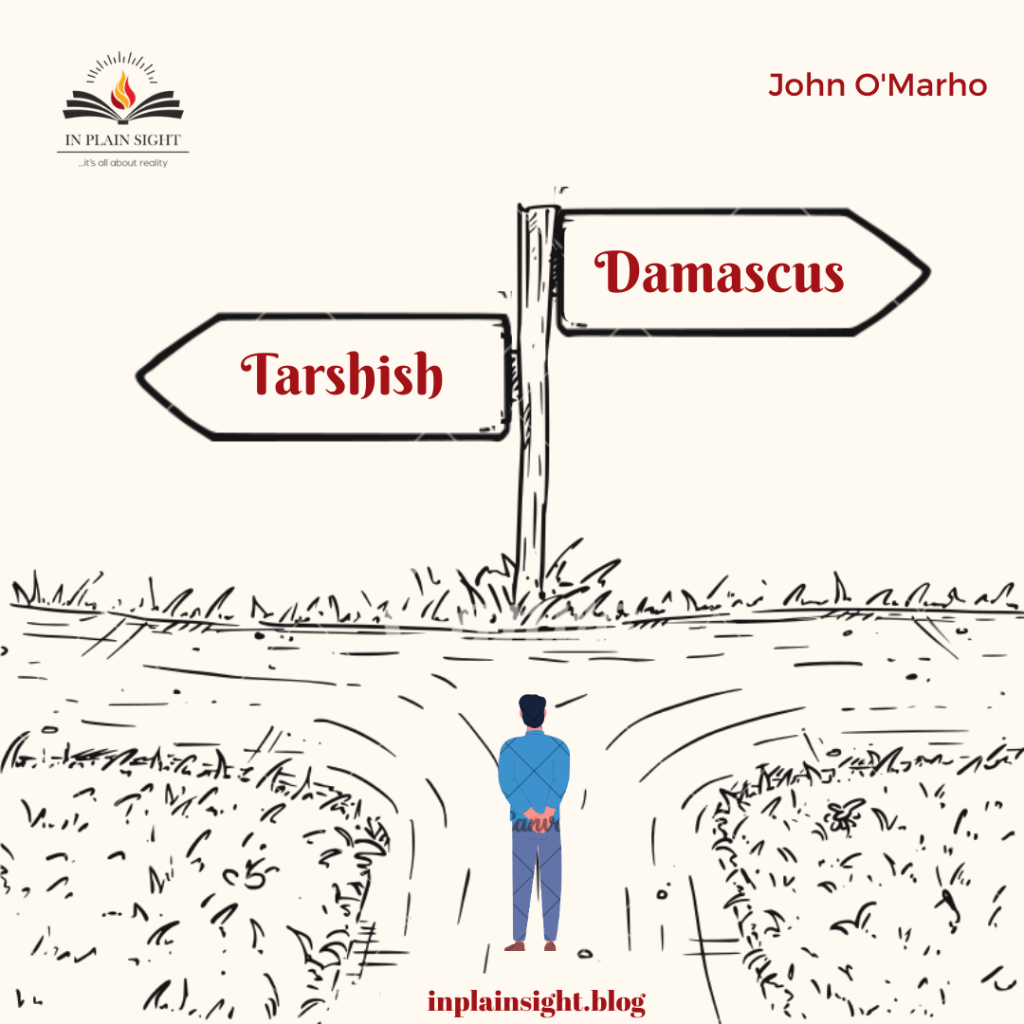
Sometimes, God’s children move like Apostle Paul did: hurtling along at breakneck speed in the wrong direction thinking it’s God’s direction- ever increasing in haste so the sound of the wind roaring past their ears drives away the gentle whisper of God attempting to course correct them. Other times, they be moving like Jonah: headlong in the wrong direction (to Tarshish) even though they’re fully aware that’s not the way of God.
It’s true that following God’s way at times can be painful and seem at odds with what we think is a good idea. But when we’re at the crossroads, and need to decide whether to follow our way or God’s way, we must remember that God sees the end from the beginning and only wants what’s best for us.
“Before every person there is a path that seems like the right one to take, but it leads straight to hell!”
(Proverbs 16:25, TPT)
Following a path that isn’t God’s way can only ultimately lead to discontent, suffering and pain- serious pain. Are you on the road to Tarshish or Damascus? You don’t have to go through a world of pain before you course correct. Listen, obey, and follow God’s way for you now.
God help us all.
 In Plain Sight
Leave a comment